Theory
Navy Blue
Navy Blue
#223344Click to copy
Navy Blue Parameter Conversion Table
More converters →HEX#223344Copy
RGBrgb(34, 51, 68)Copy
HSLhsl(210, 33%, 20%)Copy
HSV/HSBhsv(210, 50%, 27%)Copy
CMYKcmyk(50%, 25%, 0%, 73%)Copy
Navy Blue Color Schemes
Complementary
#223344
Click to copy#443322
Click to copyAnalogous
#224444
Click to copy#222244
Click to copySplit Complementary
#442222
Click to copy#444422
Click to copyMonochromatic
#223344
Click to copy#536679
Click to copy#8699AC
Click to copy#000000
Click to copy#000000
Click to copy#000000
Click to copyNavy Blue WCAG Accessibility Contrast
WCAG Calculator →The contrast ratio of this color against common foreground/background colors (based on the WCAG 2.1 standard)
Sample text Aa
White background #FFFFFF
12.92 : 1
AA NormalAA LargeAAA NormalAAA Large
Sample text Aa
Black background #000000
1.63 : 1
AA NormalAA LargeAAA NormalAAA Large
Sample text Aa
Light gray background #F5F5F5
11.85 : 1
AA NormalAA LargeAAA NormalAAA Large
Sample text Aa
Dark gray background #333333
1.02 : 1
AA NormalAA LargeAAA NormalAAA Large
Navy Blue Shade Variants
Gradient Generator →Lighten with White Mixed with white for a lighter, softer color
10%
20%
30%
40%
50%
60%
70%
80%
90%
Darken with Black Mixed with black for a deeper, heavier color
10%
20%
30%
40%
50%
60%
70%
80%
90%
Muted / Morandi Mixed with gray and desaturated for a sophisticated muted tone
10%
20%
30%
40%
50%
60%
70%
80%
90%
Navy Blue Color Introduction
Definition
Navy Blue (HEX #223344) has the RGB value rgb(34, 51, 68), the HSL value hsl(210°, 33%, 20%) and the CMYK print value cmyk(50%, 25%, 0%, 73%). In terms of color schemes, the complement of Navy Blue is #443322, and placing the two side by side produces a striking, eye-catching contrast; paired with the analogous colors #224444 and #222244 that sit next to it on the color wheel, it transitions naturally and harmoniously; in a split-complementary scheme (#442222, #444422) it keeps its contrast tension without losing layering; and a monochromatic scheme built on Navy Blue uses gradients of lightness and saturation to create a unified design with a strong sense of depth. Under the WCAG accessibility standard, Navy Blue has a contrast ratio of 12.92:1 against white and 1.63:1 against black; paired with a white background it reaches AAA, making body text highly readable.
Color Characteristics
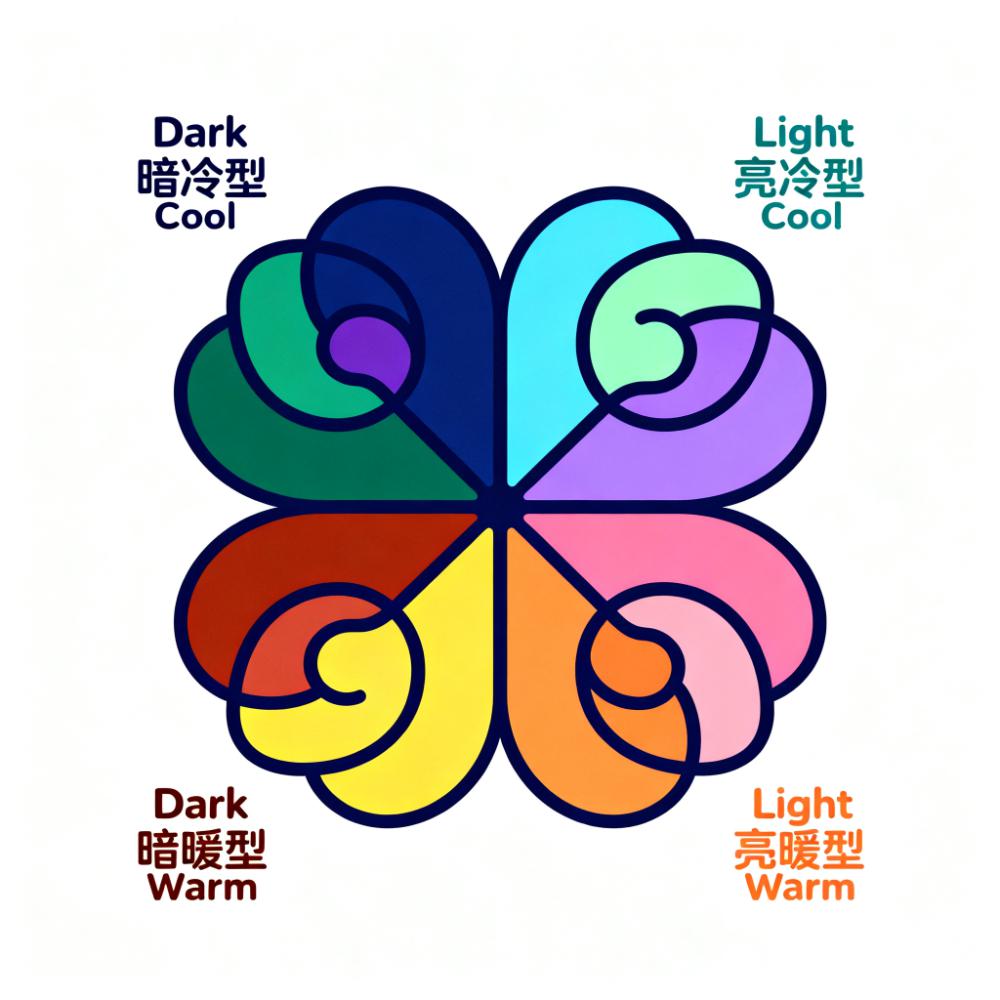
Blue is the color of sky and ocean, evoking vastness, trust and reason. Steady and imposing, it is almost irreplaceable in technology, finance and corporate identity design. Specifically, Navy Blue has a lightness of 20% and a saturation of 33%, steady and powerful as a background or primary color, pairing well with light text for good readability; moreover, its saturation is fairly low and its gray tone is soft, carrying a quiet, Morandi-like character. In a word: A low-saturation cool navy blue, professional and understated — a common color for dark-cool workplace attire.
Color Psychology
Blue can evoke calm, focus and trust, with a marked stabilizing effect; psychologically it symbolizes reason, loyalty and depth. For this reason Navy Blue tends to leave a first impression of being cool and reliable in the viewer’s mind, and this emotional tone also defines the role it plays in design.
Best Uses
Blue suits fintech, corporate websites, government systems and any scene that needs professional trust. In real projects, Navy Blue is also often used as a dark background or heading text color; in “Blue”-themed designs, the adjacent colors or lightness gradients built around it quickly establish a cohesive, clearly layered color scheme.
Navy Blue Featured In
This color is included in the following color cards and color families. Click a card to browse more colors in the corresponding collection.